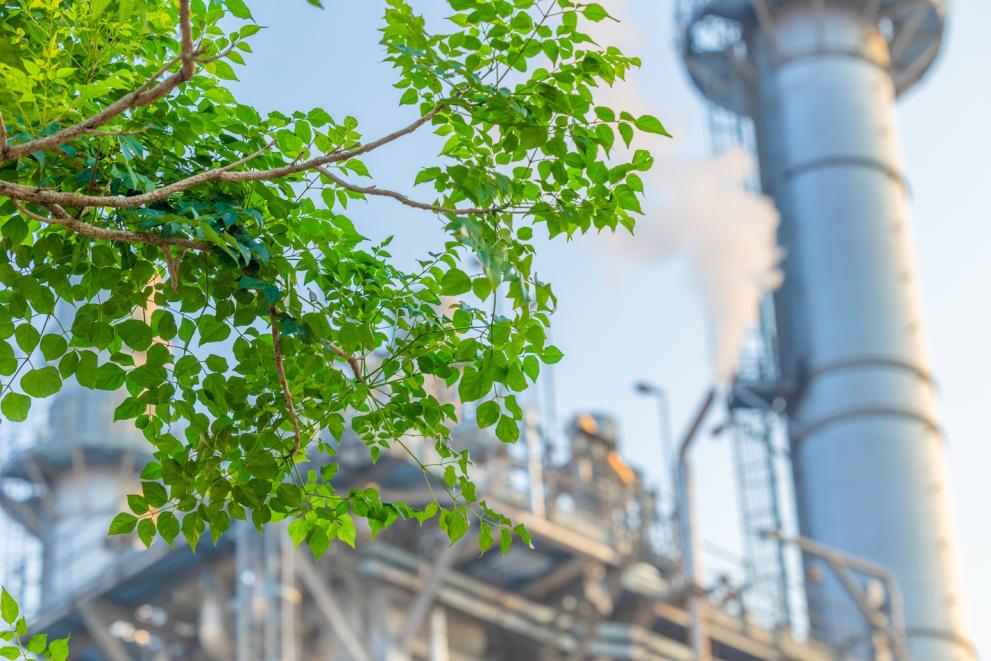
Europe’s industrial decline is not inevitable, but reflects decades of deindustrialisation, weakened strategic autonomy, and growing dependence on external actors for energy, manufacturing, critical technologies, and defence. At the same time, the transition to net-zero emissions offers a major opportunity to rebuild Europe’s industrial base through clean technologies, renewable energy, electrification, green hydrogen, and low-carbon value chains.
Mario Draghi is right: the EU will either catch up or be condemned to a long agony. This agony is already taking shape in the industrial sector, which faces a risk of rapid decline. Many companies have expressed concerns about the diminishing competitive edge and the shrinking viability of production in Europe in recent years. The Antwerp Declaration, endorsed in February 2024 by 1,316 organisations, highlighted the potential for industrial collapse in the absence of coordinated reforms and investments at the European level. However, this moment also presents a great opportunity: the transition to net-zero emissions could become a reindustrialisation plan for Europe. For this to happen, the EU needs a paradigm shift: it’s time to embrace the potential of a bold European industrial strategy.
Two decades of deindustrialisation and increased dependencies
Industrial decline is not a new trend for the European economy. Deindustrialisation has been ongoing for 30 years: manufacturing accounted for 20% of the EU’s GDP in 1990 but dropped to 14% in 2009 during the financial and economic crisis, before stabilising at the current 15%. This initial wave of industrial decline was mainly due to the emergence of services as the primary driver of economic growth. While the industry declined, the EU’s GDP increased by 68%. Focusing on services led Europeans to outsource technology and product manufacturing, mainly to countries with lower labour costs. However, not all Member States followed the same trend. Central and Eastern European countries took advantage of convergence with the rest of the European Union to maintain a large share of industry in their economies and become European powerhouses. By 2023, manufacturing accounted for around 20% of GDP in Slovakia and Czechia. Germany also preserved its industrial base, mainly composed of a competitive and export-oriented SME ecosystem. On the other hand, France experienced the sharpest decline, with industry contributing just 10–12% of GDP, similarly to Spain and Portugal. More than 2.3 million manufacturing jobs were lost in the EU between 2008 and 2023, deeply affecting regions like País Vasco, the Ruhr, Wallonia, Hauts-de-France, Greek Macedonia, and Silesia.
In the 1990s, as the global economy entered an era of free trade and political stability, closing European industries to prioritise high-value services and technologies while importing cheaper goods appeared cost-efficient for many. Economic security and strategic autonomy were not major concerns in the post-Soviet era, and most decision-makers lost interest in industrial strategies. This short-sighted geopolitical outlook resulted in Europe outsourcing energy supply to Russia, manufacturing to China and Southeast Asia, and defence to the United States, essentially placing its fate in the hands of geopolitical predators.
The industrial decline weakens Europe’s strategic autonomy
In a world of geopolitical shifts, where China emerges with solid industrial policies based on massive investments and planning, and the US does not hesitate to use trade measures, the EU is paying the high cost of the loss of its strategic industries. Europe is heavily reliant on imports, including for critical technologies and products like batteries, semiconductors, and solar panels, leaving it economically vulnerable.
The steel industry has lost 30% of its capacity and 100,000 jobs since 2008, even as demand might rise with the need to strengthen our defence capabilities. Similarly, Europe’s annual car production dropped by 5 million between 2000 and 2020, while China increased its output by 25 million vehicles over the same period. With the war in Ukraine, European capitals discovered that being dependent on Russian gas exposes companies and households to energy blackmail. The recent energy crisis linked to the EU’s high dependence on imported gas has largely affected industries in all Member States and could lead to a new wave of deindustrialisation. Energy prices are two to three times higher in Europe than in the United States and China, creating a significant competitiveness gap. Shifting from Russian pipeline gas to American or Qatari liquified natural gas (LNG) was an urgent security imperative, but it has increased the price volatility for companies
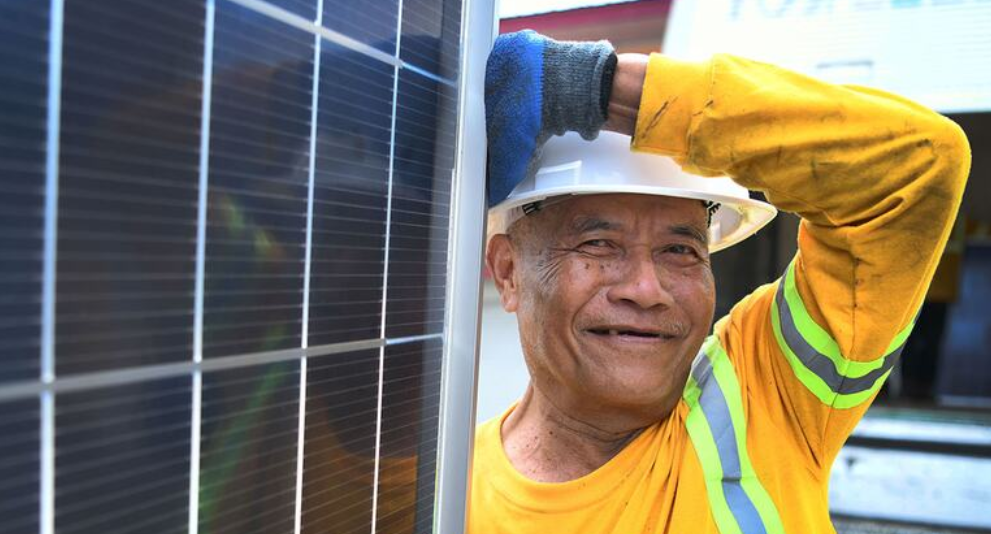
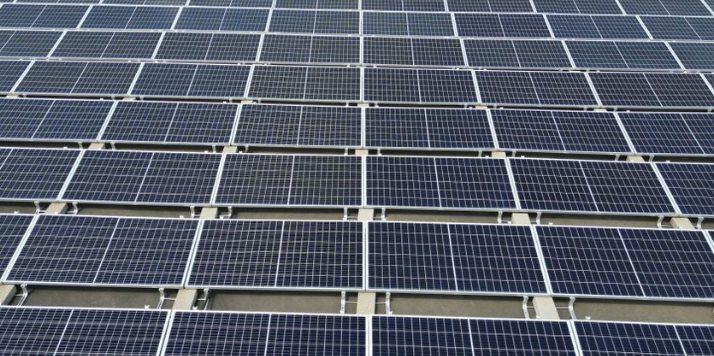
A similar risk exists with Europe’s reliance on China for solar panels, batteries, and permanent magnets for wind turbines – all crucial components for achieving net-zero emissions. China’s aim to become a near-monopoly on net-zero technologies poses a serious threat to Europe’s energy transition, especially as Beijing considers restricting exports of some critical materials. The EU’s response, the recent Net-Zero Industry Act, marks a key piece of legislation that sets production targets in Europe for strategic industries – a first step in increasing manufacturing on its soil.
Another obstacle to strengthening European industry is the slowdown in productivity growth and innovation. Industry is one of the main drivers for innovation in major economies, accounting for 50% of all corporate research and development spending in Europe in 2019. However, limited access to scale-up financing to build innovative manufacturing sites is an important bottleneck on the road to reindustrialise the EU, as identified by Mario Draghi. While U.S. companies and start-ups attract half of global venture capital, the EU secures only 5%, leading many European start-ups to relocate to the U.S.. This innovation gap reduces the ability for the EU to be the first mover on technologies that will shape the global economy.
Europe’s reindustrialisation can only be green
Industrial decline is not inevitable for Europe. Despite calls to roll back major EU climate reforms adopted in the last five years, the net-zero transition appears to be the EU’s best asset for reindustrialisation. The Green Deal, the largest set of European decarbonisation laws, is starting to have concrete effects. One-third of the EU’s economic growth in 2023 came from the net-zero transition, according to the International Energy Agency. Net-zero investments rose from €353 billion in 2020 to €498 billion in 2023, largely driven by the rapid deployment of renewables and heat pumps as the response to the war in Ukraine and the resulting energy crisis, and the emerging electric vehicle value chain. The Green Deal’s laws are building a favourable environment for investors, with even non-European companies like Taiwan’s Prologium and China’s BYD heavily investing in new battery manufacturing in Europe.
Decarbonisation is also crucial for the heavy industry to regain competitiveness in the long run. The electrification of industrial processes and the use of green hydrogen open a new window for the European industry and can increase its resilience to energy price shocks. Companies that delay decarbonisation risk falling behind as the new net-zero industrial era emerges.
Spain is the best example of this development. The rapidly growing deployment of wind and solar energy is turning the country into an energy haven for industries. Electricity prices in Spain are approximately 45% lower than in the rest of the EU due to the well-advanced decarbonisation of power generation and competitive renewables. Spain aims to generate 80% of its electricity from renewables by 2030, maintaining a solid competitive advantage for the economy. This is likely one of the main factors behind the recent joint investment of €4.1 billion from CATL, the leading Chinese battery maker, and the car manufacturer Stellantis to open a battery factory in Zaragoza. It also explains why Spain is a very attractive location for green hydrogen investments, accounting for about 20% of all announced European projects. In other words, the decarbonisation of the Spanish economy is generating industrial opportunities with hundreds of projects in the pipeline, driving job creation and economic revival. A recent study by McKinsey projects a 10–20% GDP increase and 1.5 million new jobs in Spain and Portugal by 2030 through the net-zero transition.
The Iberian Peninsula is not an isolated case. In the Hauts-de-France, the rise of the “battery valley” is creating 20,000 jobs in the electric vehicle sector and reversing decades of deindustrialisation. Numerous industrial sites, such as Stellantis in Sochaux and Renault in Cléon and Douai, have been given a new lease of life, with workers reskilling and new industries emerging. In 2024, green industries became the first lever of French reindustrialisation, proving that decarbonisation can halt industrial decline.
A Made-in-Europe industrial strategy
However, let’s be clear: the green reindustrialisation of the European economy is not guaranteed. Major obstacles lie ahead. In 2024, slowdowns in renewable deployment, electric car production, and heat pump installations significantly impacted emerging industries. Many governments are implementing inconsistent policies like cutting support for electric car purchases or house renovations, undermining these sectors and threatening jobs and innovation. This unpredictability may have contributed to the bankruptcy of Northvolt, the leading European battery manufacturer. Attempts by significant parts of the political landscape to roll back the Green Deal create even more uncertainty, posing risks for future investments. As a result, European steel producers such as ThyssenKrupp and ArcelorMittal are reviewing or suspending their plans for domestic green steel production, while cleantech producers struggle to scale up.
Adding to these challenges, Chinese competitors, backed by domestic subsidies and overcapacity, are entering the European single market with cheaper products and putting even more pressure on European industries. Without decisive action, the EU risks losing the emerging industrial base it needs to secure strategic materials and products.
The Clean Industrial Deal proposed by European Commission President Ursula von der Leyen is a response to those challenges and could position the EU in the new global net-zero race. But to be effective, it requires a paradigm shift in European policies. The single market cannot remain an open field for China’s overcapacity. With its 450 million consumers, the EU can change the rules of the game to favour its own industry.
Introducing a European preference for strategic sectors, such as wind manufacturing, automotive, and steel, is urgently needed to protect our emerging value chains from Chinese competition. This preference, also called the Buy European Act, could apply whenever public money is spent, for instance through bonuses for electric cars, auctions for renewables, or public procurement. From the U.S. to China, Brazil, Argentina, and India, many countries already prioritise domestic producers for critical technologies. Redirecting European taxpayer money to support domestic industries and value chains rather than Chinese imports would create investment security that many manufacturers need. However, this approach faces resistance from some EU governments.
Joint European investment will also be crucial to building integrated value chains. Currently, lithium extracted in Portugal is sent to China for refining and then imported back into Europe in the form of batteries. This is highly inefficient. Unlocking joint industrial projects that ensure this lithium is refined in Europe and connected to battery manufacturers in Spain or France could maximise job creation and economic potential at every stage of the value chain. Similar industrial alliances could be formed for the manufacturing of electrolysers, heat pumps, and the recycling of permanent magnets for wind turbines, as well as for the production of green steel. The investment required is estimated at €668 billion, but the benefits in terms of security and job creation are significant. However, given the divide between countries that want to unlock a new EU investment plan and the “frugals,” it is not yet a done deal. An approach that is too focused on national industry and investment risks missing the opportunity for reindustrialisation, with 2 million green industrial jobs at stake.
Policy stability is key to continuing to attract industrial investment. President von der Leyen’s commitment to set a 90% GHG emissions reduction target for the EU by 2040 sends a strong message: investments in the decarbonisation and net-zero industries are welcome in Europe, especially now that the U.S. has withdrawn from the Paris Agreement a second time.
Historically, the European project has made significant progress under pressure. In the face of a new wave of collapse in European industry, will EU leaders decide to work together, support Made-in-Europe industries and unlock joint investment? Or will they prioritise short-term national interests, missing the chance for a comprehensive reindustrialisation plan for Europe? The coming months and the initial Clean Industrial Deal reforms will tell
Design by SLIK Manage Consent To provide the best experiences, we use technologies like cookies to store and/or access device information. Consenting to these technologies will allow us to process data such as browsing behaviour or unique IDs on this site. Not consenting or withdrawing consent, may adversely affect certain features and functions. Functional Functional Always active The technical storage or access is strictly necessary for the legitimate purpose of enabling the use of a specific service explicitly requested by the subscriber or user, or for the sole purpose of carrying out the transmission of a communication over an electronic communications network. Preferences Preferences The technical storage or access is necesSource: https://strategicperspectives.eu/the-great-collapse-of-european-industry-is-not-a-fatality/